Insights from the Classroom
At Caterham Prep, many parents know that the school has a strong reputation for innovation in teaching and learning. At the same time, it is completely understandable that families also hear worrying stories in the press about children and screens. Concerns about screen time, online safety and the wider impact of technology on childhood are real and legitimate.
What parents often ask us is a simple question: what does device use actually look like in the classroom?
The reality is often much less dramatic than headlines might suggest.
What device use actually looks like in lessons
In most lessons, children are reading, writing, discussing ideas, solving problems together, building things, performing, playing sport or working with physical materials. Devices are simply one of many tools that might be used when they genuinely help a pupil move forward with their learning.
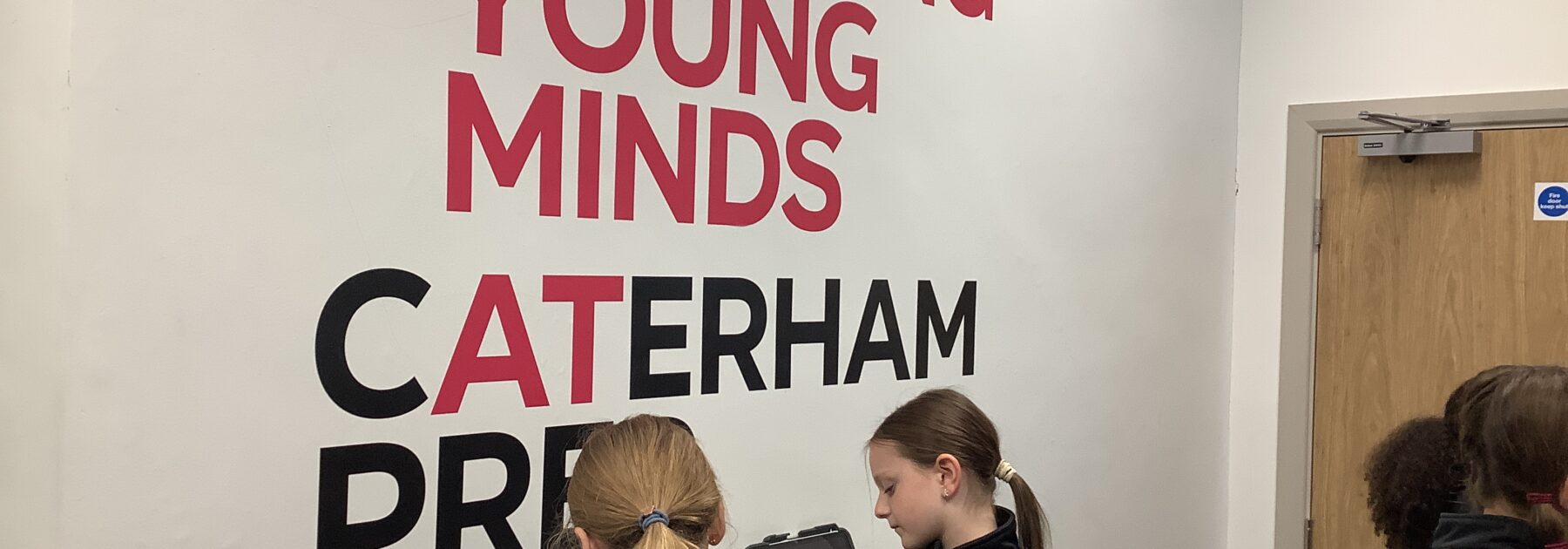
For example, in a recent lesson a pupil paused during their work and said, “I’m not sure I understand this bit.” They quickly took a photo of the learning objective on their iPad and asked RileyBot a question to help clarify what was expected. A minute later the device was closed and they were writing again.
The technology was not the focus of the lesson. It simply helped the pupil get unstuck and continue working independently.
Research from our classrooms
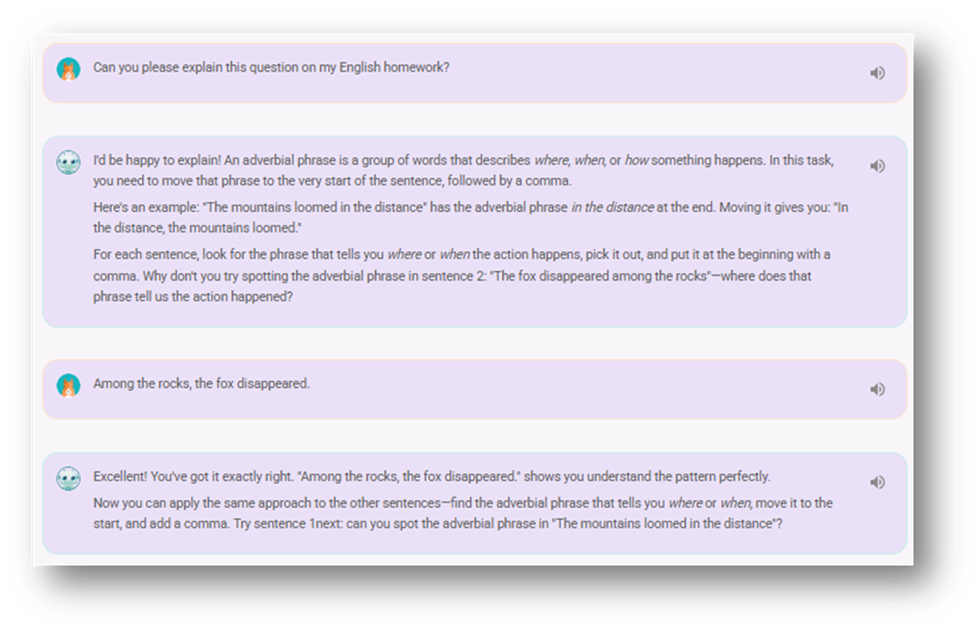
At Caterham Prep we are actively studying how AI tools such as RileyBot influence learning. This work feeds into a growing national conversation in an area where there has been a great deal of debate but relatively little classroom evidence.
Our research, now entering its third year, combines pupil interviews, teacher reflections and usage data to better understand how children actually use technology and AI during lessons. Evidence shows that pupils most often use RileyBot to clarify ideas, explore vocabulary or check their understanding before continuing with their work.
Use naturally varies across year groups. For example, Year 2 pupils have only recently been introduced to RileyBot so that they can begin using it in simple ways, such as asking for explanations when learning about a new topic. Older pupils often use it more independently as part of their learning process.
Alongside this, all children learn about how AI works and how to use it safely and thoughtfully, both as part of their Digital EDGE provision but as an aspect of Wellbeing and wider school life. Children are already encountering AI in games, search tools, and a growing volume of online media, so learning how to question, evaluate and understand these systems is increasingly part of digital safety and wellbeing.
This approach reflects wider national guidance. Government policy is increasingly emphasising that all schools should help prepare children for a world reshaped by AI and technology, recognising that pupils will grow up in a society where these tools are part of everyday life and work.
Rather than replacing thinking, our research suggests that well‑structured AI use can help pupils move forward when they are unsure about something while keeping human reasoning and teacher guidance at the centre of learning.
The 5Bs: choosing the right kind of help
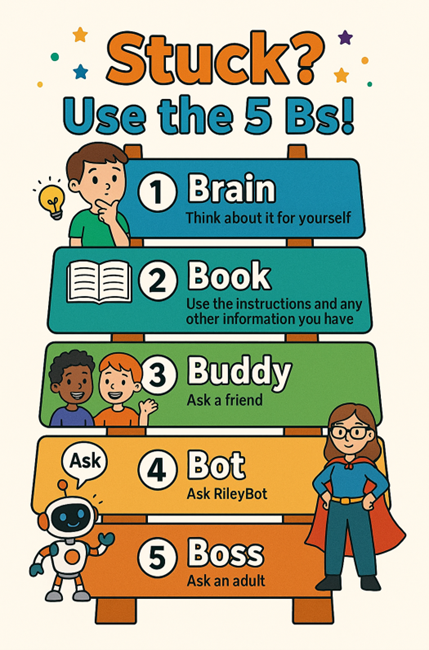
A key part of this approach is helping pupils learn when different kinds of help are useful. In our classrooms, pupils use a simple support framework known as the 5Bs:
Brain → Book → Buddy → Bot → Boss
Children are encouraged to think first, check resources, ask a partner and only then use a digital assistant if it would genuinely help them move forward before asking a teacher.
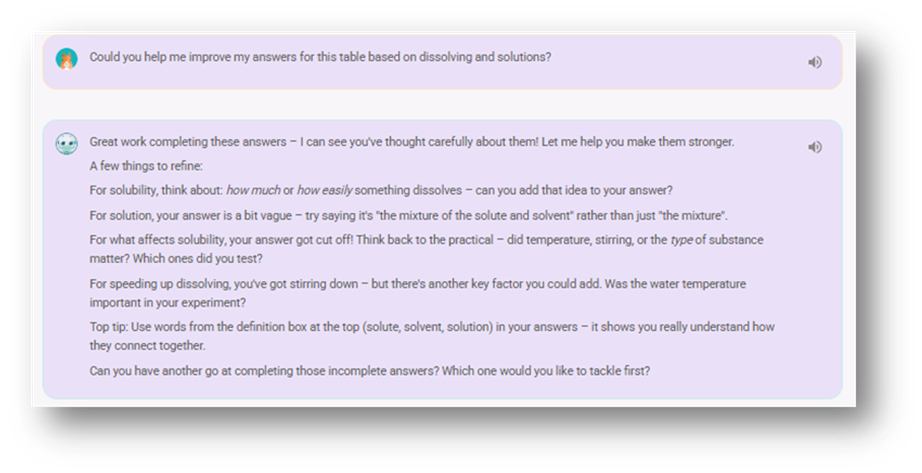
In this way RileyBot often fills the gap between peer support and teacher support. It does not replace teachers or human interaction and it doesn’t replace being stuck and working it out, but it does replace being completely stuck or waiting until tomorrow to do it better. Instead it allows children to continue thinking and learning while a teacher may be working with another group or helping another child. Very often, the cycle is Brain, Bot, Brain as we go back to think about the response and how we move on from there.
Deciding what kind of help you need, and when, is itself an important learning skill. It develops metacognition, critical thinking and independence, all of which habits that are invaluable far beyond the classroom.
Preparing our children for a changing world
Importantly, pupils are not using devices all day at school and nor should they be spending large amounts of time on screens at home. Balance remains essential. Reading, conversation, outdoor play, creativity and face to face collaboration remain central to school life.
However, the world our children are growing up in is changing rapidly. AI already shapes the media they encounter, from search engines and chat tools to games and video platforms. Research suggests that a majority of young people over the age of 5 have already used generative AI tools in some form and the greatest risks come from not understanding how it works.
To help our children develop thoughtful habits when using AI tools, we also use three simple Golden Rules for AI as part of our policy for use across the school:
- Know how it works – we must understand that generative AI is a tool created by people, that is trained on data that can show errors or bias and that it can make mistakes: learning not to take everything you read at face value and to fact-check before you repeat it is a critical skill for the modern world.
- Be honest when you use it – we should always be open about when they have used AI as part of their work – this is the same as showing your working in Maths or taking notes in English: it is an insight into the learning.
- Be accountable for what you make – even if AI helps, we remain responsible for the ideas, decisions and final work we produce.
These rules help pupils build the judgement needed to use technology responsibly, while keeping human thinking and creativity at the centre of learning.
In such a world in which critical thinking and media literacy have never been more important, learning how to intelligently question what we see, check sources carefully and understand how digital tools work is increasingly an essential life skill.
Helping children learn to use technology safely and confidently is therefore both a safeguarding responsibility and preparation for the wider world.
The big idea
Our aim at Caterham Prep is not to increase screen time. It is to help pupils understand technology for what it is: a powerful tool that can support learning, curiosity and independence when used wisely.
Back to all news